Now that you know how much you want to spend and what you want the bike to look like, it’s finally time to go hunting. It’s easy to let your heart take over when you see a beautiful, rusty silhouette in a barn, but this is the moment where a little discipline saves you months of headache.
When you’re standing in someone’s driveway looking at a potential project, use these three filters to decide if it’s the “The One.”
1. Parts Availability: The “Internet Test”
Before you hand over any cash, pull out your phone. Search for basic wear items for that specific year and model: Pistons, gasket kits, points/condensers, and throttle cables.
- Common Bikes (e.g., Honda CB series, Yamaha XS650): You can find parts everywhere from eBay to dedicated specialty sites. These make the best first projects.
- Rare/Obscure Bikes: If you can’t find a simple head gasket online, walk away. Unless you have a lathe and the skills to fabricate your own parts, an obscure bike is just an expensive paperweight.
2. The “Essential Three” Check
Don’t worry about flat tires or a torn seat—those are easy. Check these three “deal-breakers” instead:
-
The Engine Spins: If the kickstarter is frozen or the engine won’t turn over with a wrench on the crank, the price should drop significantly. A “seized” engine usually means a full (and expensive) teardown.
-
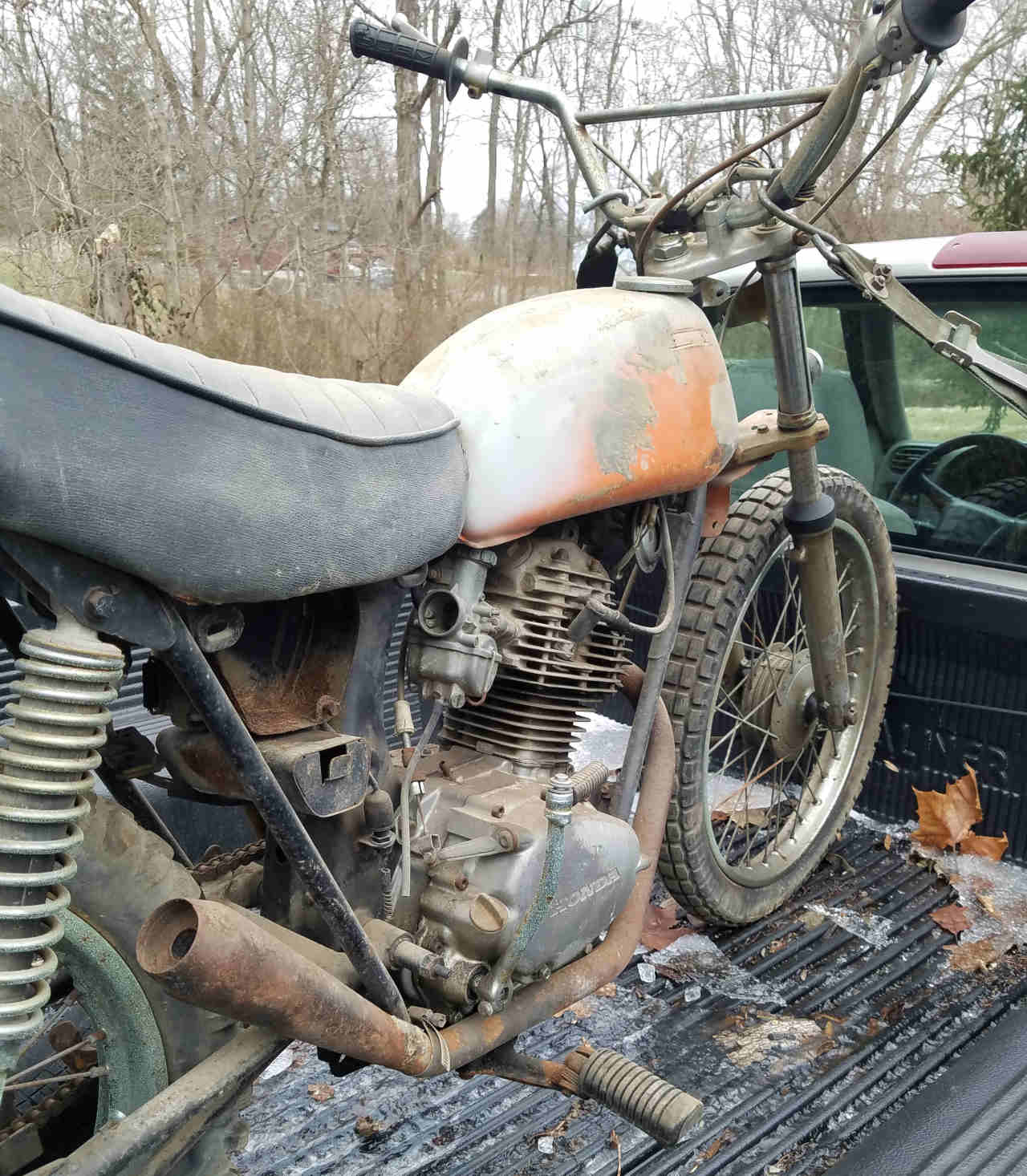
The Fuel Tank: Open the cap and look inside with a flashlight. Is it gleaming metal or a cavern of rust? A rusted-out tank can be saved, but it’s a messy, time-consuming job that often leads to clogged carburetors later.
-
The Frame: Look for hacksaw marks or amateur welding. If a previous owner tried to turn it into a “chopper” and cut the frame, the structural integrity (and the value) might be gone.
3. The Paperwork (The Ultimate Deal-Breaker)
We mentioned this in the budget post, but it bears repeating: A bike without a title is not a bike; it’s a collection of parts. Depending on your local laws, getting a “lost title” can be a bureaucratic nightmare. Unless the bike is so rare that it’s worth a year of legal headaches, look for a seller who has the paperwork in hand.
Match the Bike to Your “Detail” Goal
-
If you want a Patina Rider: Look for a bike that is 100% complete. You want the original turn signals, the original exhaust, and the original seat, even if they look a little weathered.
-
If you want a Clean Restoration: Look for a solid frame and a healthy engine. You’re going to be repainting and polishing everything anyway, so “ugly” paint is actually a great way to get a discount.
The “Golden Rule” of Picking
Buy the best bike you can afford. It is almost always cheaper to buy a $1,500 bike that runs and needs cosmetic work than to buy a $400 bike that is missing half its parts and has a seized motor.