
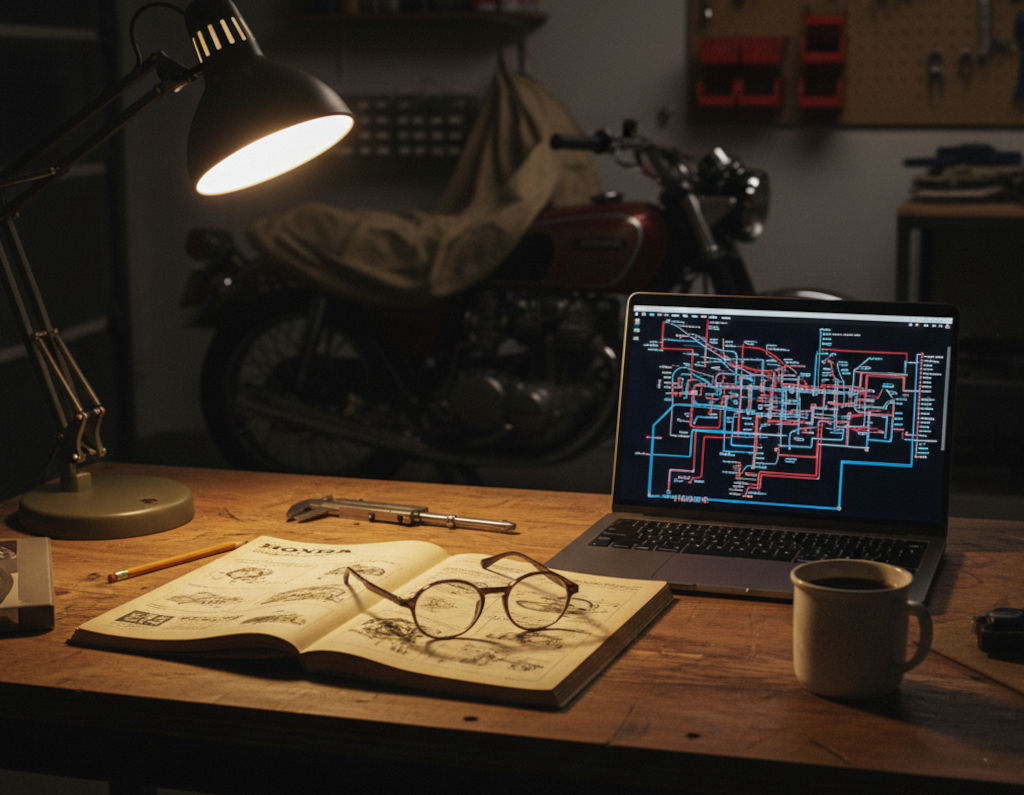
You’ve got the bike. It’s sitting in your garage, and you’re itching to tear it down. Wait. Before you remove a single bolt, you need to become a student of your machine. Vintage bikes weren’t built like modern ones; they have quirks, “mid-year” production changes, and specific engineering “isms” that can catch you off guard. Researching now saves you from breaking rare parts later.
1. The “Holy Grail”: The Factory Service Manual (FSM)
There are three types of manuals, and you should ideally own two of them:
- The Owner’s Manual: Good for oil capacities and tire pressures, but not much else.
- Aftermarket Manuals (Clymer/Haynes): These are great for beginners because they explain how to do things (like “how to use a torque wrench”). They often have better photos than the originals.
- The Factory Service Manual (FSM): This is the book the dealer mechanics used. It contains the exact tolerances, wiring diagrams, and torque specs straight from the manufacturer. If you can find an original or a high-quality PDF of the FSM, buy it. It is the single most important tool in your shed.
2. Join the “Cult” (Forums & Groups)
Every vintage bike has a “cult” of followers. Whether it’s SOHC4 for Honda fours or Access Norton for British iron, these forums are gold mines. I found a wealth of great information at XJ Bikes when I was working on the 1982 Seca Turbo.
- Search First, Ask Second: Most questions (like “Why is my spark weak?”) have been answered 1,000 times. Use the search bar.
- The Gurus: Every forum has three or four “gurus” who have been working on these bikes for 40 years. Find their threads. They often document common “death traps” or design flaws that the manual won’t tell you about.
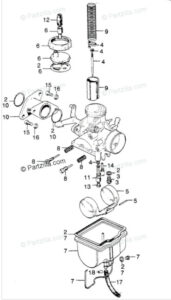
3. Parts Diagrams (The “Explodagrams”)
Sites like CMSNL or PartZilla have digitized “microfiche” diagrams. These exploded views show you every washer, o-ring, and bolt in the order they were assembled.
Pro Tip: When you take something apart and a tiny spring falls out and you don’t know where it came from, these diagrams are your only hope of putting it back together correctly.
4. Create Your “Project Bible”
Start a physical binder or a digital folder. Print out the wiring diagrams (enlarge them if you can!), save torque spec sheets, and keep a log of every part you order. This “Bible” stays with the bike, and if you ever sell it, having this documentation adds massive value.
Here’s a link to the spreadsheet that I use for every motorbike project. It’s partially completed with info for the 1971 Honda SL100 project. Simply insert your own project data and you will be good to go! Project Spreadsheet