The Quiet Revolution of Itchy Boots
For decades, the motorcycle industry has been selling a very specific kind of dream. It’s an expensive, high-octane narrative wrapped in a heavy package. Step into any showroom today, and you’re met with massive, twin-cylinder adventure machines boasting triple-digit horsepower, electronic suspension, and price tags that rival a respectable sedan. The marketing implies that if you want to truly explore the world, you need a 600-pound behemoth packed with computer sensors.
Then along came a solo traveler from the Netherlands named Noraly Schoenmaker, known to millions simply as Itchy Boots.
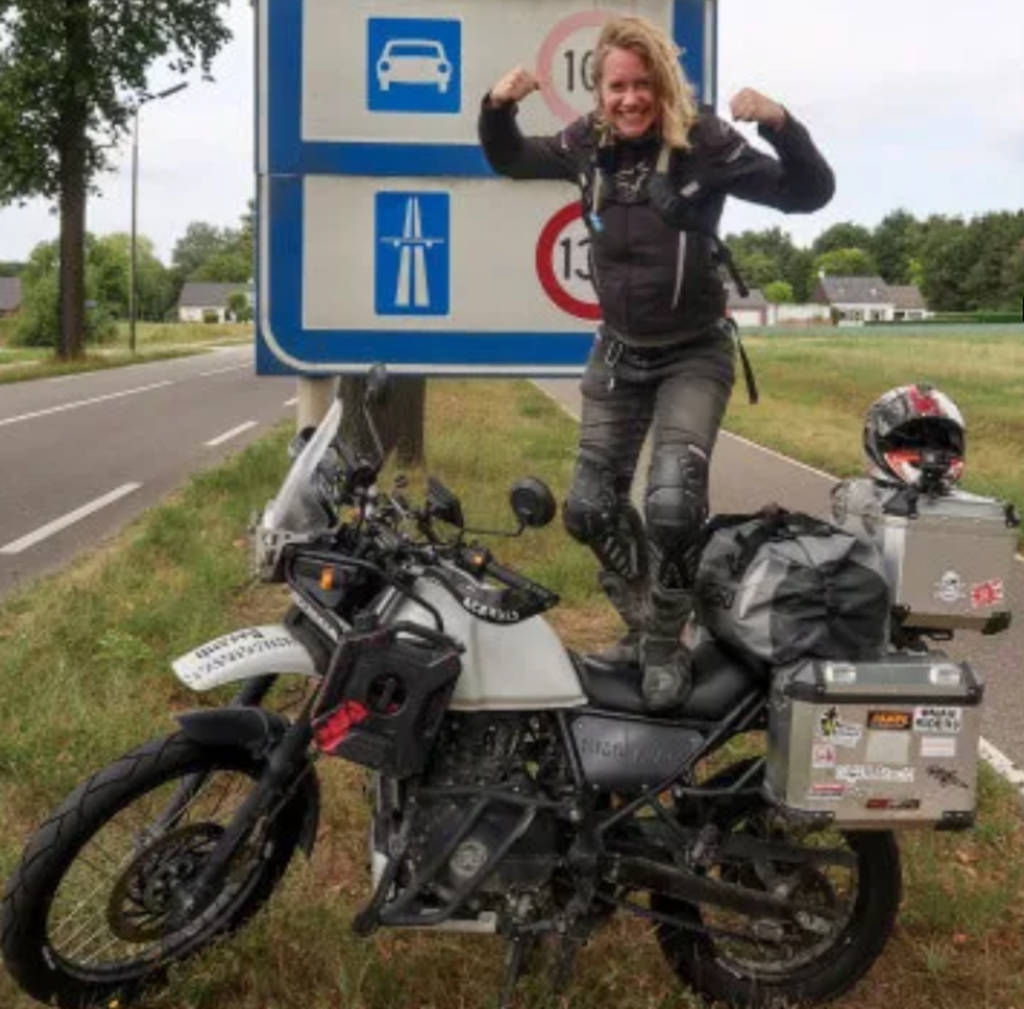
A few years ago, she bought a modest, 24-horsepower Royal Enfield Himalayan in India, pointed the front wheel west, and quietly began to dismantle the entire corporate narrative. She didn’t shout down the “bigger is better” crowd; she simply rode past them. In doing so, she opened the eyes of riders the world over to a truth that vintage bike enthusiasts and back-road wanderers have known for generations: the most profound journeys usually happen at a slower, simpler pace.
The Weight of Modern Adventure
There is no denying that modern flagship adventure bikes are engineering marvels. They can cross continents at blistering speeds on the highway. But when the pavement ends and the real world begins, that immense capability often turns into a burden.
Imagine navigating a deeply rutted dirt track along a cliffside in the Andes, or finding yourself axle-deep in a stretch of soft, unforgiving sand in Sudan. When you are traveling solo, a heavy bike introduces a constant undercurrent of anxiety. Every stop requires a calculation of footing; every muddy ditch becomes a potential trip-ender.
Noraly reminded us that when a motorcycle inevitably goes down, the best adventure bike in the world is simply the one you can pick up by yourself, dust off, and kick back into life without throwing your back out or waiting for a rescue crew. On a lightweight machine, the anxiety evaporates, replaced by a willingness to turn down that unknown, narrow trail just to see where it leads.
The Chug of the Single-Cylinder
Before Noraly began documenting her travels, the Royal Enfield Himalayan was largely dismissed by the Western motorcycle press as a budget novelty. It wasn’t fast, and it certainly wasn’t flashy. But it possessed something far more valuable for the long haul, honest, unpretentious grit.
By logging tens of thousands of miles across some of the most brutal terrain on earth with her beloved Himalayan, “Basanti,” Noraly put the bike on the global map. She showed the world the beautiful utility of a simple, air-cooled, single-cylinder engine. It’s a tractor-like motor that doesn’t hurry, but it also doesn’t quit. It just chugs along, mile after mile, finding traction where high-horsepower bikes spin their wheels.
For those who appreciate mechanical self-reliance, there is a deep comfort in that kind of simplicity. If a component rattles loose on a rough washboard road, you tighten it with a basic wrench from your tool roll. There are no complex electronics to fail, no radiator hoses to burst miles from civilization, and no proprietary software requiring a dealership diagnostic tool. It is just a rider, a simple engine, and the road ahead.
The Joy of the Simple Ride
Now I’ve owned plenty of big bikes in the past, but when you downsize your motorcycle, the entire experience of travel changes. You stop managing electronic riding modes and traction control menus, and you go back to managing the throttle, the clutch, and the scenery.
Because a small bike isn’t trying to rocket you to the next destination, you naturally slow down. You notice the shift in the gravel beneath your tires, the smell of the pine trees, and the changing colors of the landscape as the afternoon sun dips low. You become part of the environment rather than just a blur passing through it. It’s for this exact reason that I’ve never understood the concept of traveling by freeway on a motorcycle.
Noraly eventually transitioned to other lightweight mounts, like her Honda CRF300L Rally, but the underlying philosophy remained completely unchanged. True adventure isn’t measured by displacement or top speed; it is measured by your willingness to explore.
A Return to What Matters
The real magic of the Itchy Boots phenomenon is that it took adventure riding out of the exclusive domain of glossy catalogs and high-priced gear, and gave it back to everyday enthusiasts. It reminded us that the spirit of travel can’t be bought with bolt-on aluminum accessories or corporate branding.
You don’t need a massive, intimidating touring rig to see what’s over the next horizon. Sometimes, all it takes is a simple, lightweight machine, a modest kit, and the patience to let the journey unfold one steady mile at a time.
Where to Find the Journey
If you haven’t yet encountered Noraly’s travels, the best place to start is her YouTube channel, Itchy Boots. For over 3 million subscribers, her weekly videos have become a masterclass in quiet resilience, cultural curiosity, and the pure joy of the open road.
There are no camera crews, no support trucks following in the shadows, and no over-edited reality TV drama. It is just Noraly, a helmet camera, and a relentless appetite for what lies over the next horizon.
If you want to see the magic of the small-bike philosophy in action, dive into her early seasons where she takes her original Royal Enfield Himalayan, “Basanti,” across 25 countries from India back to Europe. Or, check out her current expeditions, where she continues to prove that you don’t need a massive machine to capture the entire world.
So, pour another cup of coffee, fire up the screen, and see for yourself. You might just find yourself browsing the classifieds for a lightweight single-cylinder bike of your own before the final credits roll.